Imagine your perfect Denver Saturday. It starts with a slow brunch in the heart of RiNo, followed by a stress-free trip to DIA for a weekend getaway, and ends with a sunset toast at Union Station. Now, imagine doing all of that without ever touching a steering wheel, fighting I-25 traffic, or paying a $30 parking fee.
For many, this is no longer just a “someday” dream—it is the new reality of Denver living. As the Mile High City continues to grow, our streets have become increasingly congested. The “old” way of commuting—spending hours in a steel box on the highway—is becoming a significant drain on both our finances and our sanity.
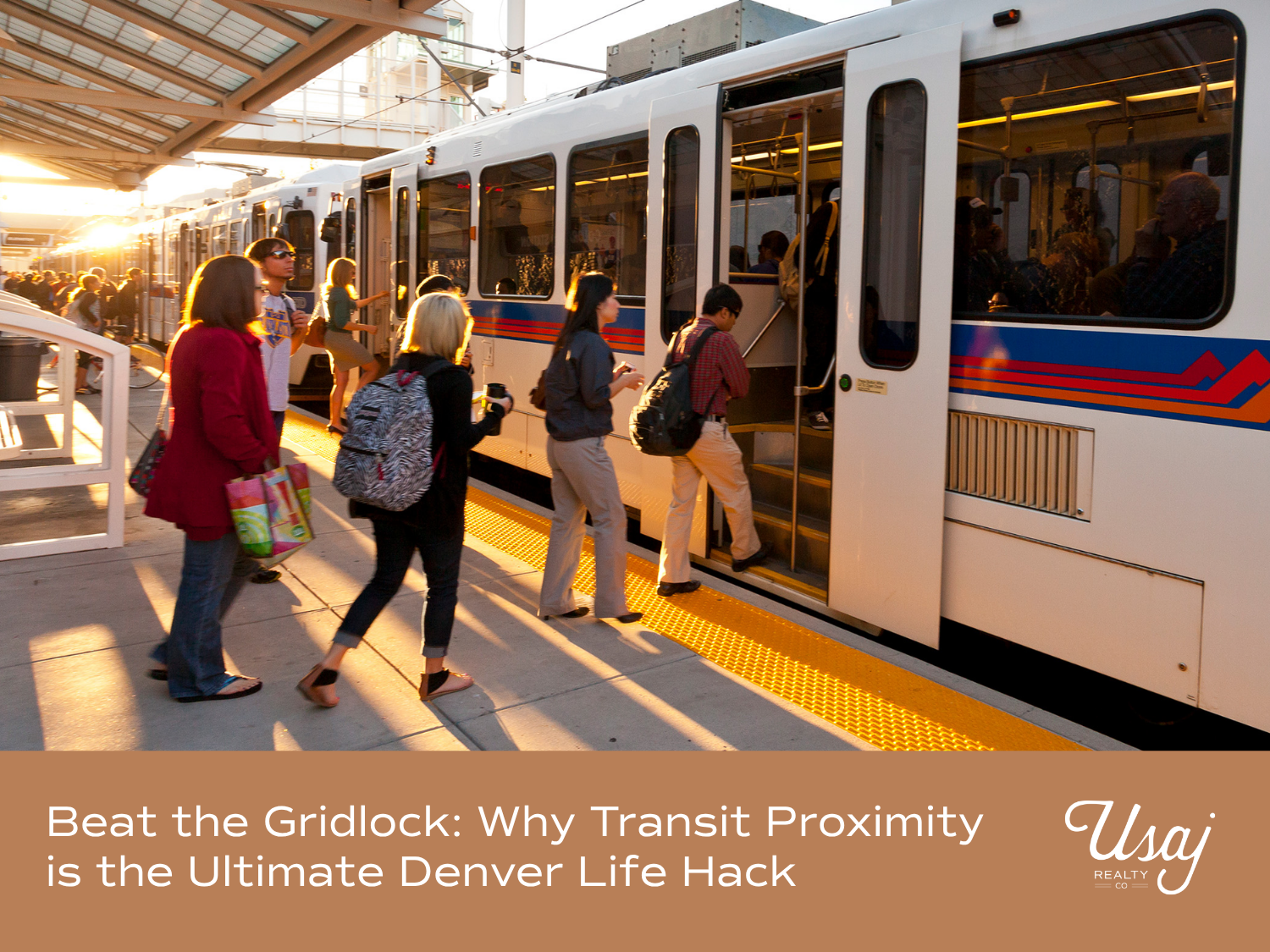
At Usaj Realty, we believe your home should be a launchpad, not a cage. As Denver’s urban real estate experts, we help our clients find locations that don’t just offer four walls and a roof, but actually give them hours back in their day. The secret? Mastering the RTD Light Rail and Commuter Rail network.
The “Transit Premium”: Why Proximity Equals Property Value
In real estate, “location, location, location” has a new neighbor: “proximity, proximity, proximity.”
A landmark study by the National Association of Realtors (NAR) and the American Public Transportation Association (APTA) found that residential property values within a half-mile of high-frequency transit outperformed the broader market by 4% to 24%. However, in high-demand transit-oriented developments (TODs), that “transit premium” can skyrocket to 40% or more compared to areas without rail access.
In Denver, we see this play out across two distinct corridors:
- The A-Line (The Growth Engine): Often called the “Train to the Plane,” the A-Line has transformed the 38th/Blake station area in RiNo from industrial warehouses into a high-density hub of luxury condos and tech offices.
- The G-Line (The Balanced Choice): Connecting Union Station to Olde Town Arvada, the G-Line offers a “stable-growth” corridor. It has revitalized historic Arvada, making it a premier choice for families who want a walkable, small-town feel with a direct “escape hatch” to the city.
Usaj Realty specializes in identifying these emerging transit corridors before they reach peak pricing, offering our clients a savvy hedge against market volatility.
Beyond the Mortgage: The “Total Cost of Living” Analysis
When browsing homes for sale near the Denver light rail, buyers often notice a higher sticker price. However, looking at the mortgage in isolation is a mistake. To understand the true value, you must look at the H+T® (Housing + Transportation) Index.
In the Denver metro area, the average household spends roughly 45–48% of its income on housing and transportation combined. In transit-rich neighborhoods like Five Points or Union Station, transportation costs can drop from the regional average of 22% down to just 12–15%.
The One-Car Household Revolution
One of the most powerful financial moves a Denver family can make is ditching a second car. By utilizing the RTD network and becoming a one-car household, the average family can save between $10,000 and $12,000 per year. This includes savings on:
- Fuel and Maintenance: Based on the current IRS standard mileage rate of $0.67/mile.
- Insurance: Saving an average of $1,800/year per vehicle in Colorado.
- Parking: Eliminating the $20+ daily fees required in the Urban Core.
For investors, this financial resilience translates to lower vacancy rates and rental premiums of 15–20% for transit-adjacent condos and Accessory Dwelling Units (ADUs).
The Lifestyle Shift: Hybrid Work and the “15-Minute City”
The post-pandemic world has redefined the commute. The light rail isn’t just for the 9-to-5 grind anymore; it’s the backbone of the Denver 15-minute city. It’s about social and leisure access—getting to a Rockies game, a concert at Ball Arena, or a gallery opening without the stress of driving.
The Health and Environmental Bonus
Living near the rail is an investment in your well-being. Data from UCLA indicates that transit users walk an average of 20 minutes more per day than those who drive. This “passive exercise” leads to lower BMI and significantly reduced cortisol (stress) levels compared to the “stop-and-go” frustration of I-70.
Furthermore, it’s a win for the planet. A single light rail commuter in Denver can reduce their carbon footprint by 4,800 lbs of CO2 per year—the equivalent of planting 50 trees. At Usaj Realty, we are committed to sustainable urban growth and helping you find a home that aligns with a greener future.
Navigating the Nuances: What to Look for in a Transit-Adjacent Home
While the benefits are clear, living near a station requires a discerning eye. Here is what we look for when touring properties with our clients:
- The “Last Mile” Solution: How do you get from the station to your front door? We evaluate the proximity to Denver’s protected bike paths and e-scooter hubs.
- Noise and Vibration: This is the most common concern. Modern Denver construction near rail lines often utilizes STC 50+ rated windows and specialized foundation dampening. We recommend visiting a neighborhood at different times of the day to get a true feel for the ambient sound.
- Accessibility and Aging in Place: For seniors, transit proximity is the ultimate independence strategy. We prioritize ADA-compliant stations and neighborhoods with high walk scores.
Spotlight on Denver’s Transit Neighborhoods
- The Urban Core (RiNo & Union Station): Perfect for those who want to be at the center of it all. New projects like T3 RiNo are solidifying this as a “live-work-play” destination.
- The Bungalow & Rail Mix (Baker & Five Points): Here, historic charm meets modern connectivity. These neighborhoods offer beautiful Victorian and Craftsman homes just steps from the D-Line and L-Line.
- The Suburban-Urban Hybrid (Arvada & Littleton): These areas offer a suburban feel with a “rail-to-city” escape hatch. Arvada, in particular, is seeing new “Missing Middle” housing like townhomes and duplexes that offer the perfect bridge for growing families.
Conclusion: Investing in Your Future and Your Sanity
Choosing a home near the Denver Light Rail is a “triple threat”: it’s a sound financial investment, a massive lifestyle upgrade, and a win for the environment. In a city as vibrant as ours, you shouldn’t just buy a house; you should buy a lifestyle that gives you freedom from the gridlock.
Ready to see which RTD line fits your life? The agents at Usaj Realty have deep roots in Denver’s transit corridors. We can provide the “boots-on-the-ground” insight you won’t find on a map—from which buildings have the best soundproofing to which stations are slated for the next wave of development.
[Contact Usaj Realty Today] for a curated list of homes for sale near the Denver light rail and start reclaiming your time.