
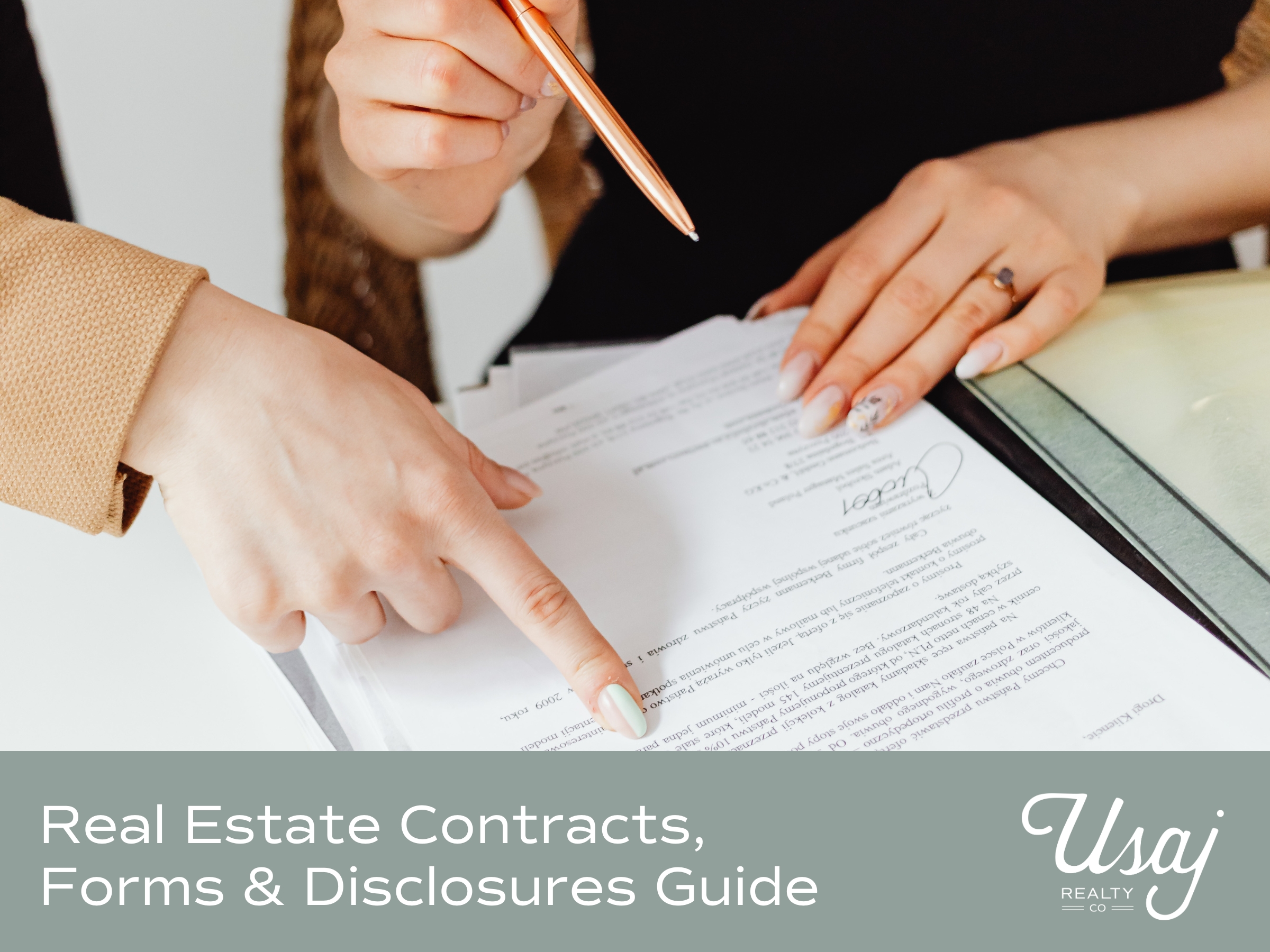
Real Estate Contracts, Forms & Disclosures Guide
Buying or selling a home comes with a lot of paperwork — and while these documents can feel overwhelming at first glance, each one plays an important role in protecting you, the property, and the transaction. This guide breaks down the most important contracts, disclosures, and due diligence documents you’ll encounter so you can move forward feeling confident and informed.
You’ll find easy-to-understand explanations of every major form, including the listing and buyer agreements, the Contract to Buy and Sell, and all of the required property disclosures. We’ll also walk you through what “due diligence” means, what documents are typically included, and why this step is so essential in making sure the home you’re buying or selling is exactly what you expect.
Whether you’re a first-time buyer, an experienced seller, or somewhere in between, this guide will help you understand the purpose of each document, what to look for, and how to stay protected throughout the process. Our goal is to simplify everything so you feel prepared, empowered, and ready for a smooth, successful transaction.
Let’s dive in!

Contracts, Forms & Disclosures
Listing Contracts
- Exclusive Right to Buy Listing Contract
- Used when a buyer hires a broker to help them find and purchase a home. It outlines the broker’s responsibilities, the length of the agreement, and how compensation works.
- Exclusive Right To Sell Listing Contract
- Used when a homeowner hires a broker to sell their property. It outlines the listing price, the broker’s responsibilities, the length of the agreement, and how compensation works.
Sales Contracts
- Contract to Buy and Sell Real Estate, Residential
- As a buyer, this is what we will submit when you find the perfect home. As a seller, this is what we’ll review when a buyer makes an offer on your home. It covers the price, terms, deadlines, contingencies, what stays with the home, financing, title, closing, and more.
- Counterproposal
- Used when the buyer or seller wants to change terms of the Contract to Buy and Sell, also known as an offer, (price, dates, inclusions, etc.) without rejecting the offer outright. This becomes the new offer for the other party to accept.
Disclosure Documents
- Seller’s Property Disclosure (Residential)
- A seller-completed form disclosing any known issues or defects with the home (roof, plumbing, electrical, past repairs, environmental hazards, etc.).
- Square Footage Disclosure
- Explains how the home’s square footage was measured (assessor records, appraiser, builder plans). This form is required to ensure transparency.
- Lead-Based Paint Disclosures
- Required for homes built before 1978. It’s a seller-completed form that informs buyers of any known lead-based paint hazards and their right to inspect.
- Lead-Based Paint Obligations of Seller
- Explains the seller’s legal responsibilities regarding lead-based paint, including providing disclosures, records, and EPA-approved pamphlets.
- Estoppel Statement
- Often used in condo/HOA or multi-family transactions. Confirms financial and rule-related information from the HOA or tenant (fees owed, lease terms, responsibilities).
- Definitions of Working Relationships
- Explains how brokerage relationships work in Colorado—agent, customer, transaction-broker—and outlines the duties owed in each scenario. A seller’s or listing agent represents only the seller, a buyer’s agent represents only the buyer, and a transaction-broker assists in facilitating the contract with both parties without advocating for either. A customer is someone the broker works with but does not represent.
- Change of Status
- Used when a broker’s relationship with a buyer or seller changes (for example, from agent to transaction-broker).
- Brokerage Disclosure to Seller (Sale by Owner)
- Given to unrepresented sellers (For Sale By Owner) to explain the broker’s role before discussing a property or assisting in a transaction.
- Brokerage Disclosure to Buyer
- Discloses the broker’s role before providing services to a buyer or unrepresented customer.
Addenda to Contracts
- Source of Water Addendum to Contract to Buy & Sell Real Estate
- Required disclosure that states where the property’s water comes from (city, well, shared system).
- Short Sale Addendum (Seller Listing Contract)
- Used when a seller is listing a home for less than they owe. Explains lender-approval requirements and timelines.
- Short Sale Addendum (Contract to Buy & Sell Real Estate)
- Attached to a purchase contract; outlines buyer and seller responsibilities when the sale price must be approved by the lender.
- Licensee Buy-Out Addendum to Contract to Buy & Sell Real Estate
- Used when a licensed agent is purchasing a property themselves. Adds required protections and disclosures for the seller and the agent.
Agreements to Amend/Extend Contract
- Listing Contract Amend-Extend
- Modifies or extends the Exclusive Right to Sell/Buy Listing Agreements between a seller or buyer and broker (price changes, date extensions, etc.).
- Agreement to Amend-Extend Contract
- Used to change or extend terms in the active Contract to Buy and Sell (deadlines, price, credits, etc.).
- Agreement to Revive Contract
- Reactivates a contract that has already terminated—only if both parties agree.
- Extension or Termination of Contract
- Used to formally extend deadlines or mutually terminate the contract.
Notice of Documents
- Notice to Terminate
- Used by either party to legally end the contract based on a permitted contingency.
- Inspection Objection Notice
- Buyer lists items they want repaired or negotiated after inspection.
- Inspection Resolution
- Buyer and seller agree on how to address inspection items—repairs, credits, or acceptance as-is.
- Title-Related Objection Notice
- Buyer objects to issues found in the title commitment (liens, easements, ownership concerns).
- Appraised Value Objection Notice
- Buyer objects if the appraisal comes in low, triggering renegotiation or lender requirements.
Closing Forms
- Earnest Money Receipt
- Confirms that the earnest money was received and who is holding it.
- Earnest Money Release
- Used when earnest money needs to be released to either party after a termination or agreement.
- Closing Instructions
- Outlines what title company will be used, how the closing will be handled, and confirms responsibilities of all parties.
Miscellaneous Forms
- Post-Closing Occupancy Agreement
- Used when the seller will stay in the home after closing. Sets terms for occupancy, payments, deposits, and responsibilities.
- Personal Property Agreement
- Documents personal items being transferred outside of the real estate contract (furniture, appliances, etc.).
- Affiliated Business Arrangement Disclosure
- Required when a broker has a business relationship with a related service provider (title, lending, etc.), ensuring transparency.
Didn’t find the form you’re looking for? Reach out to your agent for more information.

Due Diligence Documents
Due diligence documents protect buyers by giving a full picture of the home — not just what you can see during a showing. Reviewing them closely helps you understand the property, negotiate confidently, and move toward closing with peace of mind.
What Are Due Diligence Documents?
- Due Diligence Documents are materials that help buyers fully investigate a home before closing. Think of them as the “behind-the-scenes” information that shows the property’s true condition, history, and any future expenses you might need to plan for.Reviewing these documents carefully helps buyers make confident, informed decisions — and prevents surprises after moving in.
Why Due Diligence Matters
- These documents help buyers:
- Understand the current condition of the home
- Confirm there are no hidden issues
- Review legal, financial, and structural information
- Know what repairs or upgrades may be needed
- Feel confident they are purchasing the right home
-
Common Due Diligence Documents (With Examples)
- Home Inspection Report
- A detailed report from a licensed inspector outlining the condition of the roof, electrical systems, plumbing, foundation, appliances, and more.
Example: Noting a furnace near end-of-life so you can negotiate repairs or credits.
- A detailed report from a licensed inspector outlining the condition of the roof, electrical systems, plumbing, foundation, appliances, and more.
- Title Commitment
- A document from the title company showing who legally owns the property and any issues affecting ownership.
Example: Noticing an old lien that needs to be cleared before closing.
- A document from the title company showing who legally owns the property and any issues affecting ownership.
- Property Survey (or Improvement Location Certificate)
- Shows property boundaries, fence lines, easements, and any encroachments.
Example: Discovering the neighbor’s shed sits over the property line.
- Shows property boundaries, fence lines, easements, and any encroachments.
- Homeowners Association (HOA) Documents (if applicable)
- Includes covenants, rules, budgets, meeting minutes, and financial statements.
Example: Learning about upcoming HOA dues increases or special assessments.
- Includes covenants, rules, budgets, meeting minutes, and financial statements.
- Repair Receipts & Warranties
- Provides proof of maintenance, repairs, appliance replacements, or system upgrades.
Example: A warranty for a recently replaced water heater or roof.
- Provides proof of maintenance, repairs, appliance replacements, or system upgrades.
- Insurance Claim History (CLUE Report)
- Shows any insurance claims made on the property in the past few years.
Example: Seeing past claims for hail damage or flooding.
- Shows any insurance claims made on the property in the past few years.
- Home Inspection Report
Happy to Help
Understanding these contracts, disclosures, and due diligence documents is the key to a smoother, more confident real estate experience. If you ever have questions or want help reviewing anything, I’m here to break it all down and guide you through every step. Reach out anytime—I’m always happy to help you navigate the process with clarity and confidence.