

1. Executive Snapshot: A Year of Transition
The 2018 Denver real estate market represented a defining moment in the post-recession era for the Front Range. After nearly half a decade of unprecedented “frenzy” conditions—characterized by aggressive bidding wars, the routine waiving of inspection contingencies, and double-digit year-over-year price hikes—the market finally signaled a structural shift. This shift, which we have categorized as a transition toward “seasoned prudence,” saw the velocity of the market moderate as participants adjusted to new economic realities, primarily centered around affordability and rising borrowing costs.
While the Denver market trends of 2018 showed that home values continued their upward trajectory, reaching a record-breaking median sold price of $408,000, the underlying mechanics of the market were changing. The year was defined by a delicate balance between continued price appreciation and an erosion of buyer purchasing power. By year-end, the most striking indicator of this shift was a staggering 50.4% year-over-year increase in active listings. However, as our deep-dive analysis reveals, this was not due to a mass exodus of sellers, but rather a tapering of buyer demand caused by four federal interest rate hikes and a widening gap between local wages and housing costs.
Key 2018 Denver Market Metrics at a Glance
- Median Sold Price: $408,000 (+7.7% YoY)
- Active Listings (Year-End): 5,802 (+50.4% YoY)
- New Listings: 67,958 (+2.3% YoY)
- Sold Listings: 55,963 (-4.2% YoY)
- Average Days on Market: 26 Days (Stable)
- Close-to-List Price Ratio: 99.9% (-0.1% YoY)
- Showings per Listing: 10 (-9.1% YoY)
2. Detailed Narrative Analysis: The End of the “Thrill Ride”
For several years leading into 2018, the Denver real estate market operated at a breakneck speed that many analysts deemed unsustainable. Buyers were often forced to make life-altering financial decisions in a matter of hours, often competing against ten or fifteen other offers. However, 2018 was the year the brakes were firmly applied. This wasn’t a crash or a bubble bursting, but rather a necessary correction toward a more sustainable equilibrium. The primary driver of this “cooling” was the widening chasm between what Denverites earned and what homes cost.
The Affordability Squeeze and Buyer Psychology
Nationally, home prices rose by roughly 5.5% in 2018, while median household incomes lagged behind at just 1.8% growth. In the Denver metro area, this disparity was even more acute. With median home prices jumping 7.7%, the cumulative pressure of five years of high appreciation finally reached a tipping point. The “Fear of Missing Out” (FOMO), which dominated the 2016 and 2017 spring seasons, largely evaporated by July 2018. It was replaced by a more cautious “Fear of Buying at the Top.”
This psychological pivot was further catalyzed by the Federal Reserve. Throughout 2018, the Fed implemented four interest rate hikes, directly impacting mortgage affordability. A buyer who could afford a $450,000 home in January found their monthly payment significantly higher by December for the same price point. This environment led to a 4.2% decrease in total “Sold” listings, signaling that buyers were no longer willing—or able—to chase the market at any cost. This moderation allowed for more thorough inspections and appraisals, a luxury that had been absent from the Denver market for years.
The Inventory Paradox: Understanding the 50% Surge
To the casual observer, a 50.4% increase in year-end active listings might suggest a market in freefall. However, a granular look at the data provides a different story. New listings—the actual number of new homes hitting the market—only rose by a modest 2.3% for the year. The surge in active inventory was actually a result of “sluggishness” in buyer absorption rather than a flood of new inventory.
In 2017, a well-priced home in Denver neighborhoods would likely be under contract within 48 to 72 hours. In 2018, that same home might sit for two, three, or even four weeks. As homes stayed on the market longer, they accumulated, creating the appearance of a massive influx of supply. At its peak in 2018, inventory hit 9,252 active units—a far cry from the sub-4,000 levels seen in previous years, yet still well below the 24,000+ units seen in the mid-2000s. For the first time in years, this granted buyers the ability to breathe and compare options.
The Impact of Interest Rates on Purchasing Power
The 30-year fixed-rate mortgage began the year near 3.95% and peaked near 4.94% in November. This full percentage point increase added hundreds of dollars to the monthly payment of a median-priced Denver home. This “payment shock” effectively priced out a significant segment of the first-time buyer pool. When combined with Denver’s low inventory of entry-level homes, the result was a bottleneck. Investors who had been active in the $200k–$300k range began to look elsewhere for yield, as the “math” for rental properties no longer penciled out with higher interest rates and peak prices.
3. Macroeconomic Headwinds and Tax Implications
The local market did not exist in a vacuum. While Colorado’s economy remained robust, the broader national GDP growth showed signs of tapering as the year progressed. After a strong 4.2% growth in Q2 2018, the year ended with a cooling sentiment in Q4. These shifting economic winds, combined with the extreme volatility of the stock market in late 2018 (specifically the “Christmas Eve dip”), created a climate of extreme hesitation among high-net-worth buyers and real estate investors.
The SALT Deduction and Denver Real Estate
2018 was the first full year under the Tax Cuts and Jobs Act of 2017. This legislation introduced a $10,000 cap on State and Local Tax (SALT) deductions. In high-property-tax states like New Jersey or New York, this drove a migration of wealth into markets like Denver. However, for Denver residents, the cap on property tax deductions made the “cost of ownership” slightly higher for those in the luxury bracket. Buyers in neighborhoods like Cherry Hills Village or Greenwood Village became much more sensitive to property tax assessments, leading to a more critical evaluation of luxury price tags.
Employment and Population Growth
Despite the cooling real estate market, Denver’s economic engine remained a bright spot. In 2018, the Denver-Aurora-Lakewood MSA continued to attract tech talent and corporate relocations. This influx of high-earning professionals provided a “floor” for the market, preventing a price collapse. Unlike the 2008 crisis, the 2018 slowdown was not driven by job losses or subprime lending, but by a healthy market recalibrating its own value after a period of irrational exuberance.
4. Buyer and Seller Perspectives: Navigating the New Normal
The shift in 2018 required a total recalibration for both sides of the closing table. The “easy” market of the previous years had fostered some bad habits that the 2018 data quickly corrected. Professionals and consumers alike had to relearn the art of negotiation.
The Seller’s Reality: Precision Pricing Required
The era of “listing high and waiting for the bidding war to close the gap” officially ended in mid-2018. While sellers still received an impressive 99.9% of their asking price on average for the year, the path to that sale became much more difficult. Total showings across the region were down 9.1%, meaning sellers had to endure more “lookers” before finding a serious “taker.”
Success in the late 2018 market was predicated on “Day 1 Pricing.” With inventory up 50%, buyers were no longer desperate; if a home was overpriced, they simply moved on to the next listing. Sellers who understood what their home was worth based on real-time data rather than 2017 nostalgia were the ones who succeeded. Those who refused to adjust their expectations often faced multiple price reductions, which carried a stigma in a market that was becoming increasingly “conditioned” to see price drops as a sign of a defective property.
The Luxury Shift: A Surprising Resilience
Interestingly, the $1M+ luxury segment defied the general cooling trend in terms of volume for much of the year. This bracket saw a 36.7% increase in sold listings. While the entry-level market struggled with interest rates and affordability, high-end buyers remained active, often utilizing cash or larger down payments that mitigated the impact of mortgage rate hikes. However, these luxury properties required significant patience, averaging 67 days on the market—the longest of any price bracket in the 2018 Denver real estate market. This segment also saw the highest percentage of price concessions, as luxury buyers demanded perfection in exchange for their seven-figure investments.
The Buyer’s Reality: Selectivity Amidst Scarcity
For buyers, 2018 was a “double-edged sword.” The increase in available homes was a welcome relief, but the cost of financing those homes was a significant hurdle. Many buyers pivoted toward the Single Family Attached (SFA) market, which includes luxury condominiums and townhomes, as a way to maintain an urban lifestyle while managing their monthly payments. This demand drove SFA prices up by 11.1%, significantly outpacing the appreciation of detached single-family homes (which rose 7.7%).
5. Neighborhood & Micro-market Trends: A Divergent Region
Denver’s market is not a monolith. The 2018 Denver market trends revealed sharp contrasts between different suburbs and product types. High-density urban living continued to gain market share, while “drive until you qualify” suburbs saw a massive spike in listing activity as new construction finally began to hit the market in meaningful numbers.
The Rise of Attached Housing
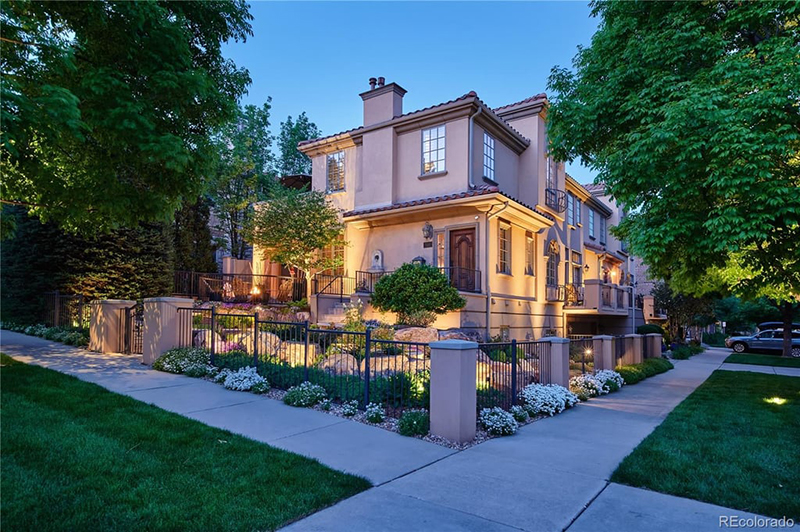
Attached housing (Condos and Townhomes) became the “hero” of 2018 for the middle-class buyer. The data shows a clear preference for these properties in transit-oriented developments.
| Area / Municipality | SFA Market Share (2018) | Median SFA Price |
|---|---|---|
| Denver (City) | 43.0% | $385,000 |
| Lakewood | 42.8% | $315,000 |
| Boulder | 40.7% | $435,000 |
| Henderson | 37.7% | $330,000 |
| Aurora | 34.5% | $265,000 |
Growth Leaders and “Drive Until You Qualify”
In 2018, we saw a massive spike in listings in outlying areas like Bennett and Deer Trail. Bennett, for instance, saw an 88.8% increase in new listings as developers and sellers targeted the far eastern plains to provide the inventory that the core city lacked. This represents a classic Denver phenomenon where buyers sacrifice proximity to the city center in exchange for a newer, more affordable home. However, even these outlying areas saw a slowdown in “Solds,” indicating that even the “affordable” options were beginning to push the limits of local debt-to-income ratios.
Conversely, some areas like Henderson experienced a significant drop in activity (-49.5% in sold listings), suggesting that when inventory dries up in smaller micro-markets, the impact on sales volume is immediate and dramatic. Meanwhile, mountain communities like Evergreen and Conifer continued to see steady demand from those looking for lifestyle changes, though they were not immune to the overall trend of increased days on market and more selective buyers.
The “Sweet Spot” and the Entry-Level Crisis
The engine of the 2018 market was the $300,001 to $500,000 price range, which accounted for over 28,000 sold units. However, below that range, the market remained brutal for buyers. Active listings for homes under $150,000 plummeted by 44.6% as these properties were either scraped for new builds or appreciated out of that bracket entirely. For the modern Denver buyer, the “entry-level” home has effectively moved from the $200k range to the $350k range, a shift that has permanent implications for Denver property management and the local rental market.
6. Comparison to Previous Years: The Five-Year Arc
To truly understand 2018, one must look at the trajectory from 2014 to 2018. During this five-year window, the Denver real estate market underwent a radical transformation that fundamentally altered the city’s socioeconomic landscape.
Price Appreciation (2014–2018)
In 2014, the median price for a Single Family Detached (SFD) home in the Denver Metro was $306,000. By the end of 2018, that figure had climbed to $439,900—representing a 43.7% increase in just four years. This level of appreciation is unsustainable in the long term, as it far outpaces local wage growth. This explains why the moderation seen in 2018 was both expected by economists and ultimately healthy for the market’s long-term viability. A market that only goes up by double digits eventually becomes a market with no participants.
The Disappearance of the Distressed Market
One of the most profound changes in the last five years is the near-total eradication of lender-mediated properties (foreclosures and short sales). In 2018, these properties accounted for a mere 0.3% of the total market. Interestingly, the price of these distressed properties has skyrocketed by over 122% since 2014, as professional investors and flippers competed aggressively for any “fixer-upper” opportunities. This effectively means that the “bargain” market in Denver no longer exists for the average consumer; “sweat equity” now requires a significant cash buy-in.
The Shift in Leverage: List Price vs. Sold Price
A rolling 12-month average of the sold-to-list price ratio shows a peak in 2016-2017, where the average was consistently above 100%, indicating that the average home sold for more than its asking price. By the end of 2018, the trend line began to slope downward for the first time in the post-recession era. Finishing at 99.9%, it served as the first signal that the leverage was beginning to shift back toward a more balanced state between buyers and sellers. By December 2018, many sellers were accepting offers at 97% or 98% of list price, a phenomenon that had seemed impossible just 24 months prior.
Final Analysis: Toward a Balanced 2019
The 2018 data serves as a post-mortem for the “hyper-seller’s market.” The year ended with a clear message: stabilization. While prices did not drop, the rate of appreciation began to normalize, and the “re-stocking of the shelves” via increased inventory provided a necessary safety valve for the market. Buyers are now more educated, more patient, and less willing to compromise on quality.
As we look toward 2019, the focus will shift from “how high can prices go” to “how much inventory can the market absorb.” With mortgage rates remaining a primary concern, the Denver market’s health will depend on continued wage growth and the delivery of more diverse housing types, such as the attached homes and townhomes that dominated the 2018 headlines. For sellers, the mandate for 2019 is clear: condition and pricing are paramount. For buyers, the opportunity to negotiate has finally returned.