Quick Facts: Central Park Denver (2026)
- Total Acreage: 2,935 acres
- Total Parks: 50+
- Commute to Downtown: ~7 miles (15-20 mins)
- Public Transit: RTD A-Line Light Rail (Central Park Station)
- Key Status: Final phases in the North End are now established.
Central Park—formerly known as Stapleton—represents one of the most successful Denver urban infill projects in history. As we move into 2026, the neighborhood has transitioned from a massive construction site into a mature, vibrant community that serves as a blueprint for modern sustainable living.
Interested in moving here? Browse current Central Park Denver listings.
The History of Stapleton Denver Airport (1929–1995)
Understanding Stapleton Denver history is essential to appreciating the scale of this transformation. For over 60 years, this land served as Denver’s primary aviation hub. When the airport closed in 1995 to make way for DIA, it left behind nearly 3,000 acres of prime real estate. This paved the way for the Stapleton International Airport redevelopment, a multi-decade project managed by Brookfield Asset Management that sought to reconnect the city grid.
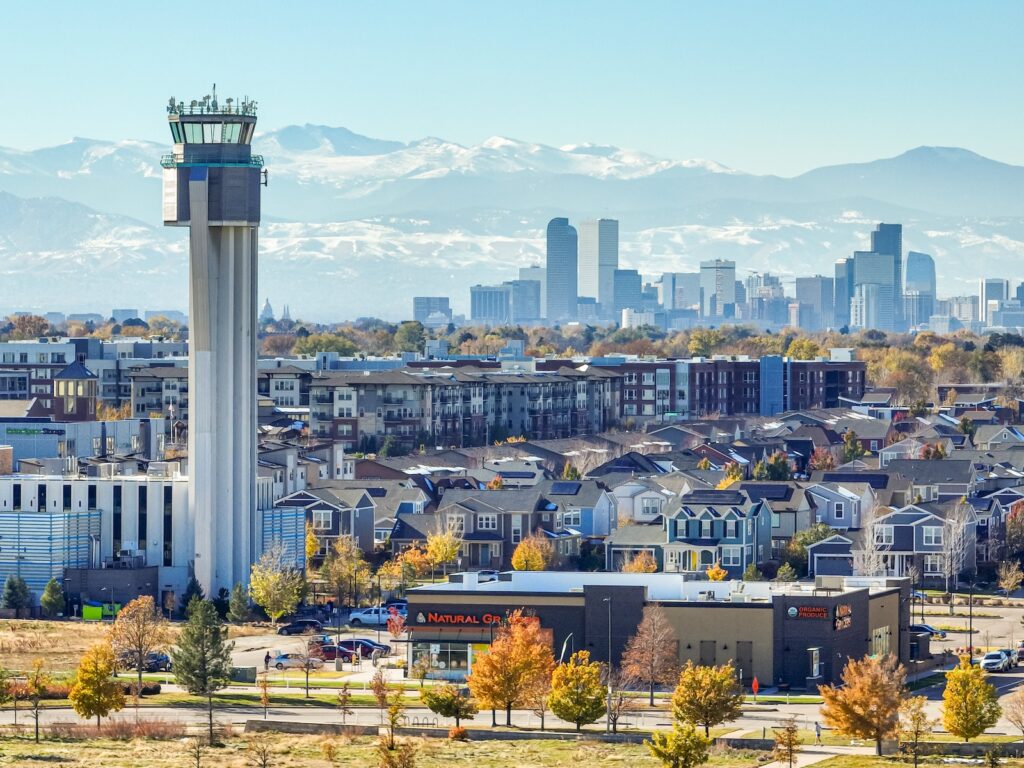
Photo Courtesy of 5280.com
One of the most recognizable landmarks remains the Stapleton Control Tower Denver. While it once housed Punch Bowl Social, it has since been revitalized as FlyteCo Tower. This local favorite now serves as a community hub featuring a brewery, bowling, and aviation-themed mini-golf—a perfect example of how the neighborhood honors its past while embracing the future.
Central Park Neighborhood: Denver’s Premier Urban Infill Project
The Central Park Denver name change marked a significant milestone in the community’s evolution, distancing the area from its namesake’s controversial history and aligning it with its defining feature: expansive green space.
Unlike traditional suburbs, Central Park was designed with “water-wise” landscaping and high-density walkability in mind. It is widely considered Denver’s “last great development” of its kind, as land for large-scale single-family homes within city limits has become nearly non-existent in 2026.
Central Park vs. Lowry Denver: A Quick Comparison
Many buyers researching Central Park Denver real estate often compare it to Lowry. Here is how they stack up:
- Central Park: Larger scale, more diverse architectural styles, and direct access to the A-Line Light Rail.
- Lowry: More established feel, closer proximity to Cherry Creek, and unique historic renovations.
Living in Central Park: Schools, Parks, and Amenities
For families, Central Park Denver schools are a primary draw. The neighborhood is home to some of the highest-rated public schools in the Denver Public Schools (DPS) system, integrated directly into the residential “filings” to allow for safe walking and biking routes.
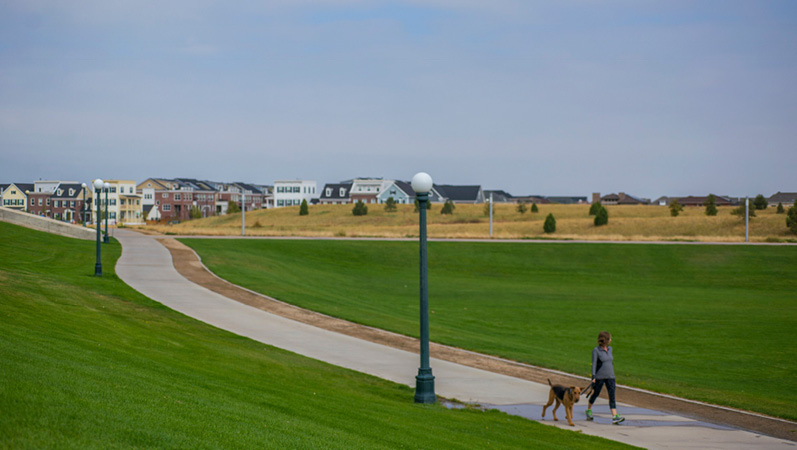
The lifestyle here is defined by the outdoors. With over 50 parks and a massive network of trails, residents enjoy unparalleled access to nature. The Sand Creek Regional Greenway offers miles of trails for cyclists and runners, connecting Central Park to the wider metro area.
The Future of Central Park Denver Real Estate
As of 2026, the final phases of development in the North End Central Park Denver have been completed. This area features some of the most modern “net-zero” ready homes and offers stunning views of the Front Range.
Because there are no more large tracts of land for new single-family homes in Denver, property values in Central Park have remained resilient. Whether you are looking for a sleek condo near the Denver A-Line Light Rail Central Park station or a spacious family home in Willow Park East, the inventory is now shifting primarily toward the resale market.
Ready to Find Your Home in Central Park?
Our team at Usaj Realty specializes in this unique market. Let us help you navigate the final phases and the best resale opportunities.