

Updated: March 1, 2026
Navigating the Denver Housing Market in Volatile Times
The 2026 economic landscape feels different than previous years. While we aren’t dealing with the lockdowns of the past, we are navigating a “higher-for-longer” interest rate environment and a shift in buyer psychology. Understanding Denver real estate trends is the first step toward making a confident decision.
Denver Market Snapshot: Q1 2026
- Average Sales Price: $742,000 (Metro Denver)
- Inventory Levels: 2.8 Months of Supply (Increasing)
- Average Days on Market: 42 Days
- Market Sentiment: Transitioning to a Neutral Market
Is Now a Good Time to Buy a House in Denver?
The short answer is: it depends on your timeline. While headline volatility can be intimidating, the local market continues to show resilience. For many, the answer to “is now a good time to buy a house in Denver?” is a resounding yes for those looking at long-term equity growth.
Benefits of Low Buyer Competition
Unlike the frenzied bidding wars of 2021-2022, the 2026 market offers more breathing room. Buyers currently have more leverage to negotiate repairs, closing costs, and even price reductions that were impossible just a few years ago.
Using Real Estate as a Hedge Against Inflation
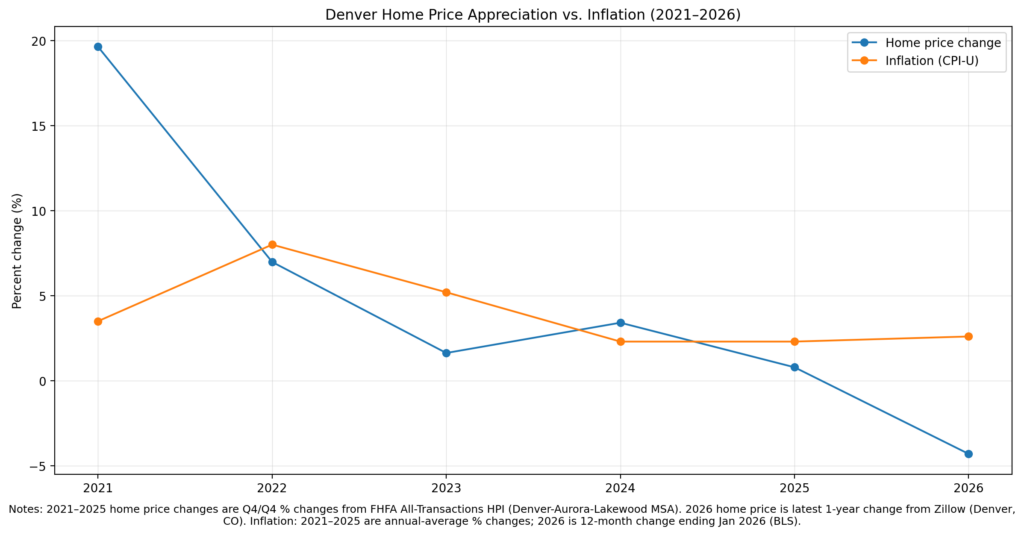
With inflation still a factor in the 2026 economy, tangible assets remain a preferred strategy. Unlike the stock market, which can see rapid daily swings, Denver real estate provides a stable hedge against inflation, allowing homeowners to lock in their housing costs while the value of the dollar fluctuates.
Selling a Home in a Volatile Market: What You Need to Know
If you are selling a home in a volatile market, your strategy must shift from “order-taking” to “active marketing.” Buyers are more discerning in 2026, and your home needs to stand out both in price and condition.
Strategic Pricing and Seller Concessions
In the current climate, pricing your home correctly from day one is vital. We are seeing a significant rise in seller concessions, where sellers contribute toward the buyer’s interest rate buy-downs. This “win-win” strategy helps buyers afford the monthly payment while maintaining the seller’s desired sales price.
Before listing, it is essential to ask: What is My Home Worth?
Denver Housing Market Forecast 2026
According to the latest 2026 DMAR Market Trends Report, we expect a modest 3-4% appreciation by year-end. While the “hyper-growth” era has cooled, the lack of massive oversupply prevents a significant downturn. For a deeper dive, check out our recent 2026 Market Report Blog Post.
Leveraging Technology: Virtual Tours and Remote Closings
Uncertainty often means people want more flexibility. Whether you are moving from out of state or simply have a busy schedule, we utilize the latest digital tools to keep your transaction moving:
- Virtual Home Buying: 3D Matterport tours and FaceTime walkthroughs.
- Remote Closings: Secure, digital notary services for a seamless experience.
Comprehensive FAQ Section
Q: Should I wait for mortgage interest rates to drop before buying a home?
A: Waiting for lower rates can be a double-edged sword. If rates drop significantly, competition typically surges, which can drive home prices up. By buying now, you may face less competition and can explore refinancing options later if rates decrease.
Q: How does economic uncertainty affect my home’s value?
A: While economic shifts can slow the pace of price appreciation, real estate historically remains a stable asset. In high-demand areas, limited inventory often keeps home values resilient even during broader market fluctuations.
Q: What is the biggest mistake sellers make during an uncertain market?
A: The most common mistake is “chasing the market” by overpricing a home based on outdated data. In an uncertain climate, an initially high price can lead to a property sitting on the market, eventually forcing a larger price cut than if it had been priced correctly from day one.
Q: Is real estate still a safe investment during a recession?
A: Historically, real estate is considered a hedge against inflation. Unlike stocks, which can be highly volatile, a home provides a tangible utility (shelter) and has historically shown steady long-term appreciation.