

In the Denver real estate market of 2025–2026, a “nice” home is no longer the gold standard. As inventory stabilizes and buyers become more discerning, they aren’t just looking for a place to live—they are looking for an investment-grade property.
The common pitfall for many homeowners is the “sunk cost” trap: spending $50,000 on a massive kitchen overhaul only to see a $30,000 bump in appraisal value. To truly increase home value in Denver, you need a data-backed strategy that prioritizes high-yield projects, future-proofs your asset against the Colorado climate, and avoids “ROI killers.”
This guide serves as your definitive roadmap to the best home renovations for ROI in 2026, tailored specifically for the Mile High City.

Phase 1: The “First Impression” (High-ROI Exterior Projects)
Curb appeal is where the most significant financial wins are found. According to the 2025 Cost vs. Value reports, exterior replacements offer far higher cost recovery than interior additions.
The Heavy Hitters
- Garage Door Replacement ROI Denver: This remains the undisputed heavyweight champion of renovations. A modern, insulated garage door currently yields up to a 268% ROI. For an investment of roughly $4,700, homeowners are seeing resale value additions of over $12,500.
- Entryway Evolution: When comparing steel vs. fiberglass entry door ROI, the data favors steel for pure recovery. A steel door replacement averages a 216% ROI due to its security and durability. However, if you are selling in a luxury market like Wash Park, a high-end fiberglass “Grand Entrance” is often expected for aesthetic continuity.
- Manufactured Stone Veneer: Adding stone accents to your home’s facade is a “texture” upgrade that yields a 207.9% ROI, modernizing 1990s-era suburban homes instantly.
Denver Specifics: Hail and Water
In Denver’s “hail alley,” marketability is tied to resilience. Fiber-cement siding vs. vinyl ROI is a frequent debate; while fiber-cement (like James Hardie) has a higher upfront cost, its impact resistance and potential for insurance premium discounts make it a major selling point. Additionally, climate-adaptive landscaping—or xeriscaping—is now a standard expectation, reducing water bills by up to 60% and attracting eco-conscious buyers.
The “Invisible” Gap: Roofs and Gutters
Don’t ignore the “unsexy” upgrades. A new roof holds a 10/10 “Joy Score” in NAR research. In Colorado, a certified hail-resistant roof isn’t just an upgrade—it’s often a prerequisite for a buyer to secure a mortgage and insurance.
Phase 2: Interior Refreshes vs. Major Overhauls
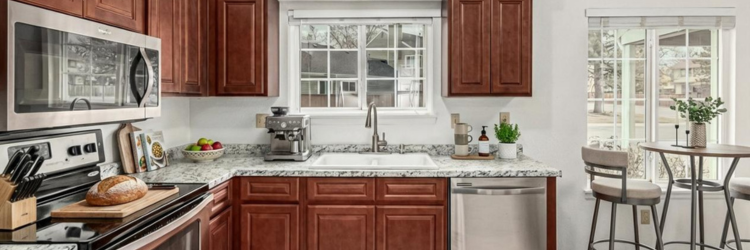
The secret to interior ROI is the “Minor Miracle.” Cosmetic updates almost always outperform “gut jobs” in the 2025 market.
The Minor Kitchen Miracle
A minor kitchen remodel ROI vs. major overhaul is night and day. Cosmetic updates—refacing cabinets, installing quartz countertops, and adding Energy Star appliances—yield 96% to 113% ROI. Conversely, high-end “chef’s kitchens” often struggle to recoup 70% of their cost if the neighborhood doesn’t support the price point.
The Spa-Like Bathroom
Focus on “Universal Design” (accessibility) and high-demand features. Curbless rain showers and double vanities are currently driving a 65-75% cost recovery while significantly increasing the home’s “Joy Score.”
The $500 ROI Checklist (Snippet-Ready)
If you’re looking for the cheapest ways to increase home value for sale, follow this high-impact list:
- Interior Painting: Stick to warm neutral tones; it’s a top-10 project that can return over 100% of its cost.
- Floor Refinishing: Hardwood floor refinishing has a verified 147% ROI.
- LED Lighting: Swapping dated fixtures for modern, energy-efficient designs improves photography and buyer perception.

Phase 3: Future-Proofing (Energy & Smart Tech)
Denver buyers are tech-savvy and environmentally aware. They are looking for homes that are “ready for the future.”
Energy Efficiency & Incentives
Upgrading your attic insulation or installing a heat pump provides a dual benefit: lower operating costs and a higher sale price.
- Xcel Energy rebates for homeowners 2025: Many HVAC rebates have tripled this year, offering up to $3,000 for air-source heat pumps.
- Federal Tax Credits: Under the Inflation Reduction Act, you can claim up to $3,200 annually for energy-efficient upgrades, effectively lowering the “investment” side of your ROI equation.
Smart Home Integration
Smart thermostats and security systems are no longer luxuries—they are the “new normal.” Listings with integrated tech sell up to 32.5% faster. Furthermore, installing a Level 2 EV charging station can add a premium of $6,000–$25,000 to your home value, as buyers look to avoid public charging fees.

Phase 4: Expanding the Footprint (Outdoor & Square Footage)
If you have the budget, adding physical square footage or usable outdoor space is a guaranteed equity builder.
Outdoor Living
In the composite vs. wood deck ROI Colorado debate, wood offers a higher immediate ROI (~83%), but composite is prized for its “climate-proof” durability in high altitudes. Buyers view a well-designed deck as a mandatory second living room.
Functional Conversions
Building an ADU in Denver is the ultimate value-add for 2026. Following recent zoning changes, Accessory Dwelling Units can increase property value by 20–25% while providing multi-generational living options or rental income. Similarly, a finished basement in Denver adds vital heated square footage, typically recouping 70-75% of its cost.

Phase 5: The “Local Market Lens” with Usaj Realty
National averages are a guide, but Denver is a city of distinct neighborhoods. This is where strategic planning becomes critical.
Neighborhood Real Estate Trends
- Wash Park: Buyers want “timeless elegance.” ROI is found in historical preservation mixed with modern primary suite extensions.
- RiNo: The “modern industrial” look wins. Rooftop decks and open, flexible “live-work” spaces command the highest premiums here.
The “ROI Killer” Warning
Before you spend, know what to avoid. In Denver, in-ground swimming pools are often ROI killers, returning less than 30% of their cost due to the short swim season and high maintenance. Similarly, converting a garage into a living space is a massive deterrent in a city where snow and hail are common.
Phase 6: Financing Your ROI
How you fund your project impacts your net ROI. With interest rates stabilizing, many Denver homeowners are using HELOCs (Home Equity Lines of Credit) to fund upgrades.
- Benchmark: Most local lenders require a credit score of 720+ and an 80% LTV (Loan-to-Value) ratio to secure the most competitive rates.
Conclusion: Data-Driven Selling
Maximizing your sale price in 2026 requires a balance of financial recovery (ROI), emotional satisfaction (Joy Score), and market liquidity (selling fast). Whether it’s a $500 paint job or a $200,000 ADU, every choice should be filtered through a local lens.
Before you swing a sledgehammer, ensure you aren’t “over-improving” for your specific block. Your home is your largest asset—treat it like a portfolio.
Ready to see what your home is truly worth? Contact Usaj Realty today for a professional Denver home valuation and a custom roadmap for your next renovation. Our agents tour homes daily and know exactly what Denver buyers are competing for right now.
Which renovation project is at the top of your list for 2026?